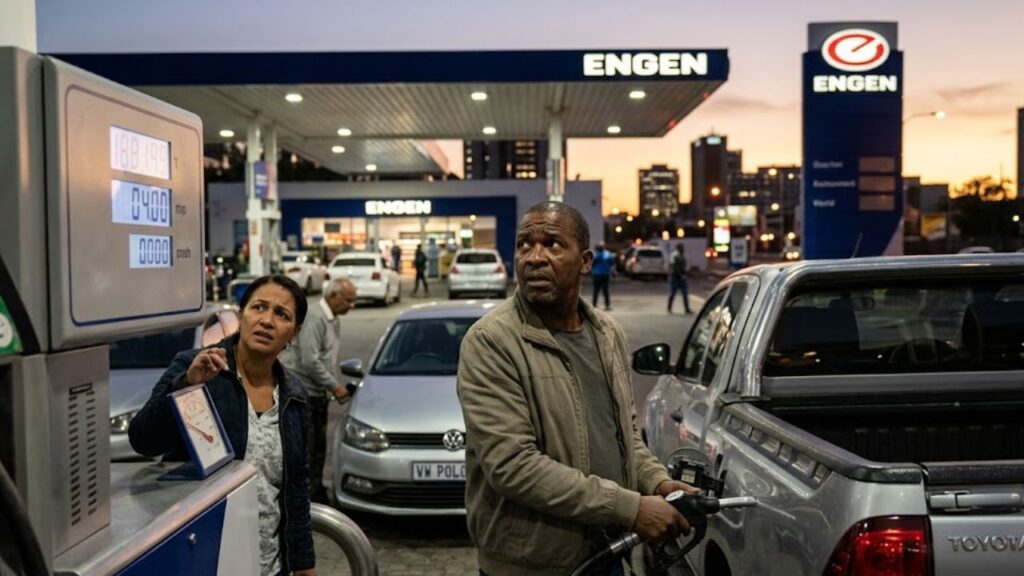
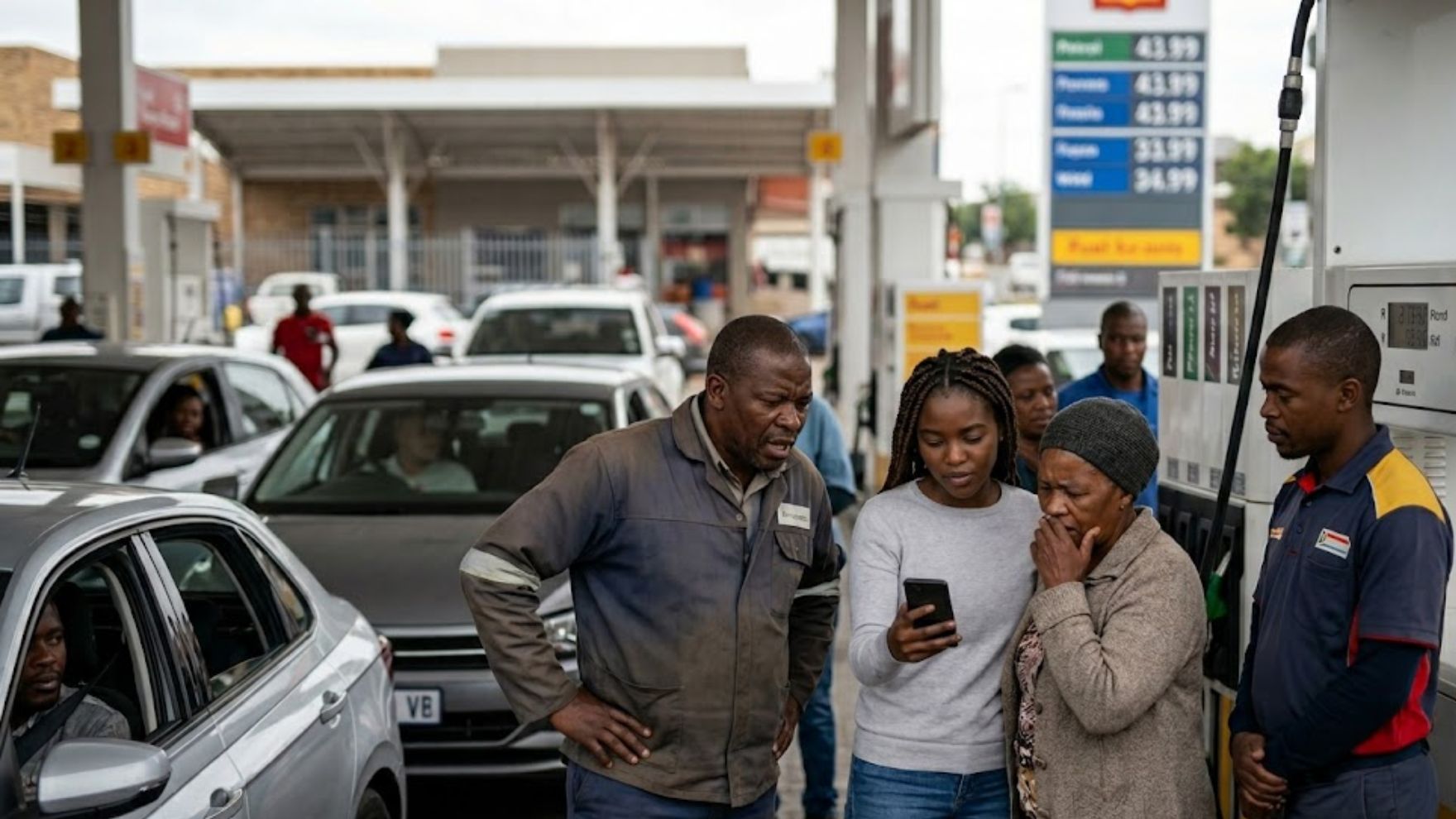
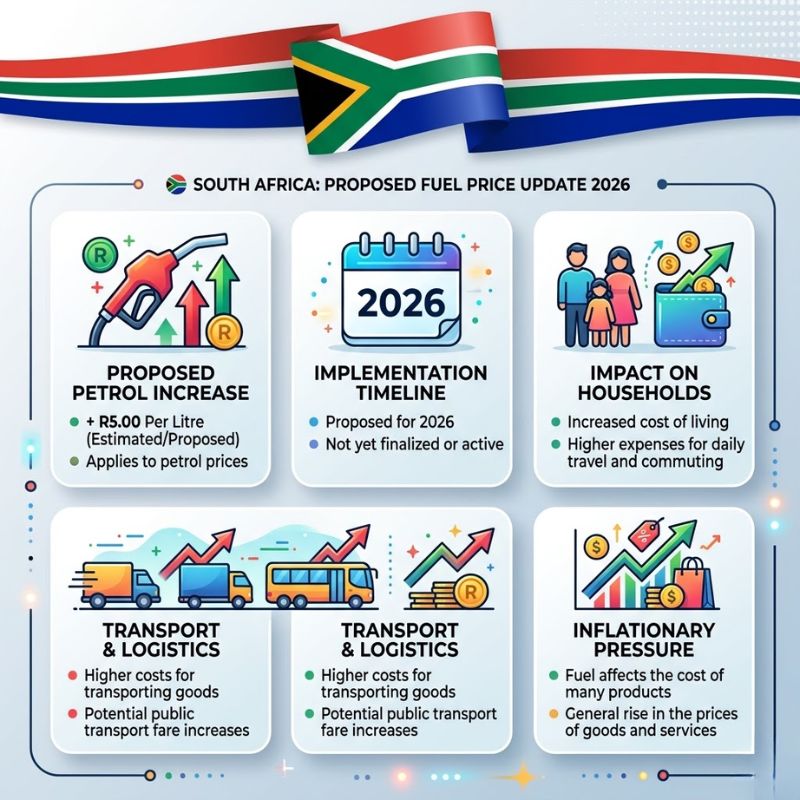
The price of petrol in South Africa is expected to rise sharply this April, with increases of nearly R5 per litre putting pressure on motorists across the country. This surge is being driven by multiple global and local factors, including rising oil prices, a weakening rand, and upcoming fuel tax adjustments. As fuel costs climb, households and businesses alike may feel the impact through higher transport and living expenses. The situation has escalated rapidly over recent days, making this one of the most significant fuel price jumps in recent years.
Petrol And Diesel Price Increase Breakdown
According to the latest data, fuel prices are expected to increase significantly across all categories. Petrol 95 is set to rise by R4.94 per litre, while Petrol 93 will increase by R4.44 per litre. Diesel prices are seeing even steeper hikes, with 0.05% diesel increasing by R8.05 per litre and 0.005% diesel by R8.16 per litre. As a result, Petrol 95 will jump from R20.19 per litre in March 2026 to R25.13 per litre in April. These increases are expected to take effect from 1 April, placing immediate financial strain on consumers.
Global Oil Crisis Driving Price Spike
The primary reason behind this sharp increase is the escalating conflict in the Middle East, which has pushed global oil prices above $110 per barrel. A key concern is the Strait of Hormuz, a crucial shipping route responsible for about 20% of the world’s oil supply. Ongoing tensions and threats of closure have disrupted supply chains, causing oil prices to surge. As South Africa relies heavily on imported oil, any increase in global oil prices directly impacts the country’s fuel costs, particularly the Basic Fuel Price component.

Weak Rand Adding More Pressure
At the same time, the South African rand has weakened due to global uncertainty, further increasing fuel costs. Investors have shifted towards safer currencies like the US dollar, strengthening it significantly. The exchange rate has now moved to around R17.20 per dollar, compared to below R15 earlier in the year. Since fuel is traded in dollars, a weaker rand makes imports more expensive, amplifying the overall price increase for consumers.

Fuel Tax Increase Still Confirmed
Despite growing concerns from the public, the government has confirmed that fuel taxes will increase in April. Adjustments to the General Fuel Levy, Carbon Fuel Levy, and Road Accident Fund Levy will be made in line with inflation. These taxes already account for a large portion of the final fuel price, meaning any increase adds directly to the burden on motorists. Unlike global oil prices, these taxes are fully controlled by the government, making them a key factor in the final pricing structure.
Calls For Relief And Government Response
Various organisations have urged the government to introduce relief measures to ease the impact on consumers. However, officials have indicated that there is limited fiscal space to provide meaningful support. Treasury representatives have stated that offsetting the full increase would cost the government significant funds, which are currently not available. As a result, motorists are likely to face the full impact of these increases with little to no relief expected in the short term.
South Africa Fuel Price Increase Table
| Fuel Type | Increase | New Estimated Price |
|---|---|---|
| Petrol 95 | R4.94 per litre | R25.13 per litre |
| Petrol 93 | R4.44 per litre | – |
| Diesel 0.05% | R8.05 per litre | – |
| Diesel 0.005% | R8.16 per litre | – |